&geometry(285x80) "Industrial and Cable Group")
Understanding Rod Ends: What They Are and How They’re Use
 "Understanding Rod Ends: What They Are and How They’re Use")
In many mechanical systems, reliable movement and precise control depend on strong and flexible connection points. One small but essential component that plays a major role in these systems is the rod end. Also commonly known as a heim joint or rose joint, rod ends provide a durable pivoting connection that allows motion to be transferred smoothly between components.
At Industrial and Cable Group, rod ends are commonly used with push-pull cable systems to help transmit linear motion efficiently and reliably.
What Is a Rod End?
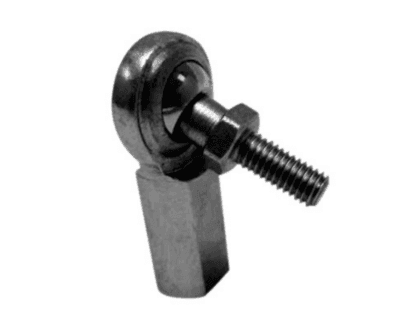
A rod end is a mechanical joint that connects a threaded rod or cable terminal to another component while allowing movement and slight angular misalignment. It consists of a spherical bearing mounted inside a housing, which enables the joint to pivot as the connected components move.
This pivoting capability is critical in applications where parts must move while remaining securely connected. Rod ends allow motion to be transferred without placing unnecessary stress on the cable or linkage system.
How Rod Ends Work in Push-Pull Cable Systems
In push-pull cable assemblies, rod ends act as the connection point between the cable’s threaded terminal rod and the machinery or mechanism being controlled.
They help ensure:
- Smooth transmission of linear motion
- Reliable operation under load
- Flexibility to accommodate slight misalignment
- Reduced stress on the cable system
Because of their strength and versatility, rod ends are widely used in systems that require precise control and consistent performance.
Common Applications
Rod ends are used across many industries where motion control and mechanical linkages are required. Typical applications include:
- Steering systems
- Throttle controls
- Mechanical linkage systems
- Hand- or foot-actuated push-pull linkages
- Suspension and control systems
In heavy-duty applications, larger rod ends are often used in systems such as sway bar end links, control arms, panhard bars, three-link and four-link suspensions, and strut tower braces.
Types of Rod Ends Available
Industrial and Cable Group offers several types of rod ends to suit different environments and performance requirements.
Chrome molybdenum rod ends are known for their high strength and durability, making them ideal for applications that require the joint to withstand heavy loads and demanding conditions.
These are commonly used in structural or high-performance linkage systems.
Stainless steel rod ends offer excellent corrosion resistance, making them a good choice for environments where exposure to moisture or harsh conditions may occur.
They are often used in push-pull cable systems that require reliable performance with minimal maintenance.
Steel Housing with Nylon Race Rod Ends
Rod ends with a steel housing and nylon race provide smooth operation and reduced wear. The nylon race helps minimise friction and can reduce the need for frequent maintenance.
These rod ends are widely used in hand- or foot-actuated push-pull linkages.
Choosing the Right Rod End
Selecting the correct rod end depends on several factors, including:
- Load requirements
- Environmental conditions
- Required level of movement or misalignment
- Maintenance considerations
- Whether metric or imperial sizing is required
Industrial and Cable Group supplies rod ends in both metric and imperial sizes to suit a wide range of mechanical and motion control applications.
Quality Motion Control Components
Rod ends may be small components, but they play a critical role in ensuring that motion control systems operate smoothly, safely, and reliably. Choosing high-quality rod ends designed for your application can help improve performance, reduce downtime, and extend the lifespan of your machinery.
Industrial and Cable Group supplies a wide range of rod ends, push-pull cables, and cable accessories to support motion control systems across many industries.
Explore the range and order online anytime at:
www.industrialandcable.com.au
Free shipping on orders over $150
Engineered tough. Delivered fast.
 "Industrial and Cable Group") Author:Industrial and Cable Group
Author:Industrial and Cable Group